Black Mold?
Don't Take Chances! Call the Top Black
Removal Company in Puyallup and get cleaned up FAST!



Why Choose Us?
- Certified Pros
- Available 24/7/365
- Rapid Response
- Fully Licensed And Insured
- We Work With Your Insurance Company
Call Now (253) 399-6545
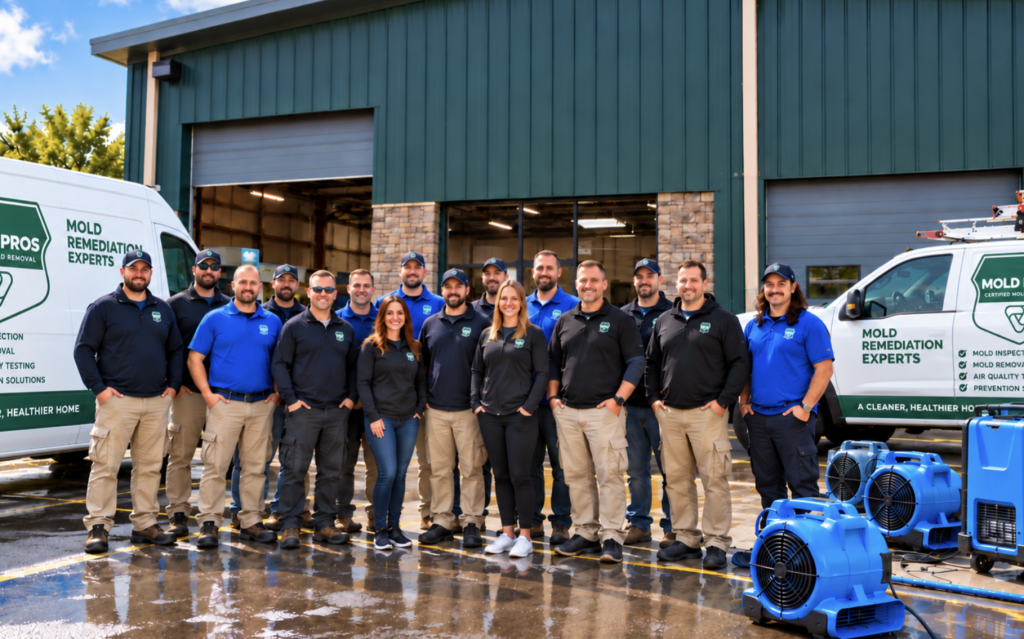
Mold cleanup starts with controlling the moisture and protecting the rest of the building. Our team at Puyallup Mold Remediation Pros helps property owners address visible growth, hidden moisture, and materials that no longer support safe cleaning. We work in homes, apartments, condos, offices, schools, churches, medical facilities, retail spaces, and industrial properties. The work plan changes with the material, affected area, moisture source, and access to the building.
What Can Cause Mold Problems in Puyallup Properties?
We begin by reviewing what you noticed, where moisture entered, and whether the area is still damp. Roof leaks, plumbing leaks, window failures, drainage problems, condensation, and crawl-space moisture require different source-control steps. In Puyallup, wet conditions are most common from about October through March, so roof and exterior water intrusion often needs attention before cleanup starts. Properties near local river systems also require parcel-specific flood and drainage review rather than a blanket assumption about flood exposure.
Our first work area is the affected part of the building, not the entire property. We protect unaffected rooms with containment, which means plastic walls and barriers that help keep mold dust from spreading. Workers use appropriate personal protective equipment and careful removal methods for damaged materials. A HEPA air scrubber filters mold dust from the air while work proceeds, helping reduce airborne particles within the controlled area.
Source control remains central throughout the project. We address the active moisture condition that is allowing growth to continue, such as a plumbing leak, roof opening, failed window seal, or crawl-space moisture problem. We do not simply paint over visible growth or cover damp materials. Dry conditions, controlled removal, and proper cleaning give the property a better chance of staying clean.
What’s Included
Our mold remediation scope is built around safe work-area control, removal of affected porous materials, and cleaning of surfaces that remain suitable for restoration. We explain the planned work before starting so you know which rooms and materials are involved. The exact scope depends on the affected size, moisture source, access, and construction. Common included steps are:
- Setting up containment and protecting nearby unaffected areas.
- Using HEPA air filtration and suitable protective equipment during work.
- Removing affected porous materials, such as drywall, insulation, carpet, or other materials that cannot be reliably cleaned.
- Cleaning appropriate hard surfaces, including selected framing, concrete, tile, or other nonporous materials.
- Managing debris and leaving the work area ready for the next property repair phase.
Drywall and insulation often require removal because they absorb water and can hold growth inside or behind the finished surface. Carpet and padding also retain moisture and soil, especially after flooding or a prolonged leak. Framing, concrete, and tile have different cleaning limits because they do not absorb moisture in the same way. Attics and crawl spaces require extra care because tight access, insulation, exposed wood, and limited airflow can hide moisture.
What’s Not Included
Remediation is not the same as rebuilding the property after damaged materials are removed. Replacing drywall, flooring, cabinets, trim, insulation, or framing is not described as part of this mold-remediation scope. Painting, finish carpentry, and full construction repairs should be planned after the affected area is cleaned and dry. We identify these boundaries so the next contractor or property manager can plan the remaining work.
- Major reconstruction or finish replacement after removal.
- Repairs to roofing, plumbing, drainage, appliances, or building systems.
- Independent mold testing or laboratory identification.
We do not perform mold testing; independent testing or assessment can help when the extent or type of a problem needs outside documentation. Color alone does not identify a mold species, so what people commonly call black mold should not be diagnosed by appearance. The cleanup plan should focus on moisture, material condition, affected area, and safe removal. For signs, immediate actions, testing questions, and health resources, see our mold warning signs guide.
How do materials change the cleanup plan?
Porous materials soak up water and often need removal when growth has spread into them. Drywall can hold moisture behind paint, while insulation can trap dampness against framing. Carpet, padding, and subflooring need close review after leaks or flooding because water can travel below the visible area. If wood framing remains structurally sound, it may receive detailed cleaning rather than automatic removal.
Concrete and tile are less absorbent, but their joints, edges, cracks, and backing materials still require attention. An attic with a roof leak may involve damp sheathing, insulation, and venting problems. A crawl space may involve exposed soil, missing ground moisture control, wet insulation, or damp floor joists. Department of Health guidance highlights crawl-space ventilation, insulation, and ground moisture control because these conditions affect building moisture.
Commercial work also requires planning around occupants, business hours, inventory, and shared air paths. A downtown Puyallup office or retail space may have older assemblies and neighboring tenants close to the work area. South Hill properties may involve newer multifamily, retail, or mixed-use construction with shared walls and mechanical systems. We keep the work area defined and discuss access needs before work begins.
How long does mold remediation take?
There is no reliable fixed job length without knowing the affected materials and work-area size. A small, accessible area with limited porous damage usually requires less work than a crawl space, attic, or multi-room loss. Containment setup, removal, cleaning, drying, and clearance of the work area all affect the schedule. Hidden moisture or continued water entry needs attention before the cleanup can be considered complete.
Occupants do not automatically need to leave for every project. The decision depends on the containment plan, affected location, building use, occupant needs, and the amount of work. Children, older adults, and people with respiratory concerns should discuss exposure questions with a healthcare professional. Businesses and property managers should also plan for restricted access, noise, equipment, and temporary room closures.
What affects mold remediation pricing?
Actual mold remediation costs vary based on affected materials, work-area size, containment needs, access, and the moisture source. A final scope and price require an inspection before work begins. Removing saturated drywall and insulation usually involves more labor than cleaning a limited hard-surface area. Crawl spaces, attics, tight utility areas, and multi-level buildings can also require additional setup and careful access.
Pricing is shaped by the condition behind the visible growth, not just the size of the stain. A small wall mark can connect to a plumbing leak inside the wall or damp insulation behind it. A larger surface area may still have a manageable scope if the moisture source is stopped and the materials are accessible. We explain the work area, removal needs, and cleanup tasks before moving ahead.
What credentials does our team hold?
Puyallup Mold Remediation Pros is IICRC certified, and we are in good standing with the BBB. These credentials do not replace a property-specific work plan. The building, moisture source, and damaged materials still determine the recommended scope. Department of Health guidance also advises property owners to check licensing, bonding, insurance, and contractor history when hiring indoor air or water-damage professionals.
For city properties, the City of Puyallup Development and Permitting Services department can help with local building, planning, engineering, and code questions. Permit or compliance needs depend on the repair work planned after remediation. Flood-related questions should be checked against property-specific maps and local guidance because risk varies by parcel. This is especially useful for valley-floor properties, commercial sites, and buildings near drainage corridors.
If you see active water, shut off the source if it is safe and keep people away from the affected area. Call (253) 399-6545 to discuss what you found and which part of the building is involved. We will ask about the moisture source, affected materials, access, and any urgent conditions before arranging the next step. Please do not paint over visible growth or disturb heavily affected materials before that conversation.
Frequently Asked Questions
Do you remove mold from drywall and insulation?
Yes, affected drywall and insulation are reviewed for removal when they have absorbed moisture or contain growth that cannot be reliably cleaned. These materials can hide contamination behind finished surfaces. Removal is performed inside a controlled work area to limit dust movement. Replacement after removal is a separate repair phase.
Does mold remediation include fixing the leak?
The moisture source must be stopped for remediation to hold. Our scope focuses on containment, affected-material removal, and cleaning of suitable remaining surfaces. Roof, plumbing, appliance, drainage, and structural repairs are separate building tasks. Tell us if the area is still wet so the work plan accounts for that condition.
Is a crawl space treated differently from a room?
Yes, crawl spaces often have tight access, exposed wood, insulation, and ground moisture concerns. The work plan must account for airflow, floor joists, subflooring, and safe movement through the space. Public health guidance recommends attention to crawl-space ventilation, insulation, and ground moisture control. Continued moisture should be corrected so cleaned surfaces do not become damp again.
Can a commercial property remain open during remediation?
Some businesses remain open when the affected area is isolated and access is controlled. That decision depends on the work location, shared air paths, building use, and containment plan. Offices, retail spaces, schools, and medical facilities often need scheduling around occupants and operations. A property manager should plan for restricted rooms, equipment, and possible temporary closures.