GOT MOLD ?
Don't Take Chances! Call the Top Mold
Remediation Company in Puyallup and get cleaned up FAST!



Why Choose Us?
- Certified Pros
- Available 24/7/365
- Rapid Response
- Fully Licensed And Insured
- We Work With Your Insurance Company
Call Now (253) 399-6545
Puyallup Mold Remediation Services
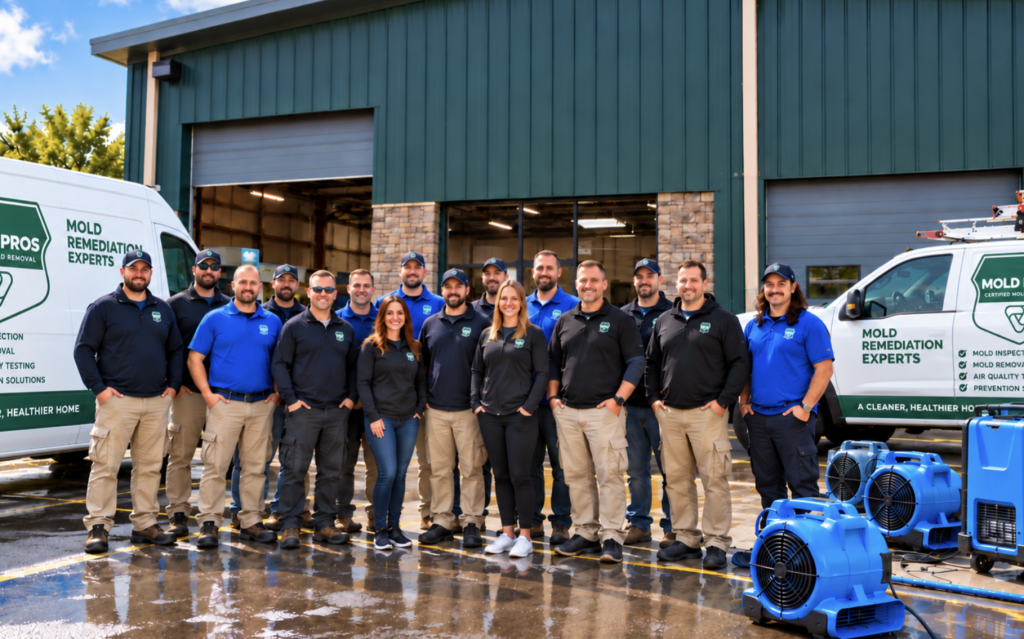
Mold problems often begin with moisture that stays hidden longer than expected. In Puyallup, fall and winter rain, indoor humidity, plumbing leaks, and damp crawl spaces can all affect a home or business. We help property owners identify the moisture problem, control the work area, and remove affected materials when needed. Our goal is to leave you with a cleaner space and practical steps for preventing the problem from returning.
Why Puyallup buildings often need mold cleanup
- Seasonal roof leaks: Wet weather from roughly October through March can expose failed flashing, worn roofing, or ceiling areas to repeated moisture.
- Damp crawl spaces: Exposed soil, weak ground moisture control, and poor airflow can keep wood framing and subfloors damp beneath the building.
- High indoor humidity: Humidity that stays above about 60 percent can support mold growth, even when there is no obvious plumbing leak.
- Window and door leaks: Failed caulking, seals, or flashing can let rain enter wall cavities around older and newer openings.
What makes mold problems different across Puyallup properties?
The location and construction of a building affect where moisture collects and how far it spreads. Older wood-frame homes around Downtown Puyallup often have aging windows, roof details, or enclosed wall areas that need careful review. South Hill includes newer homes, multifamily buildings, retail spaces, and mixed-use properties with different ventilation and drainage concerns. Valley-floor properties near major waterways also need property-specific review of heavy-rain and flood risks, rather than assumptions based on location alone.
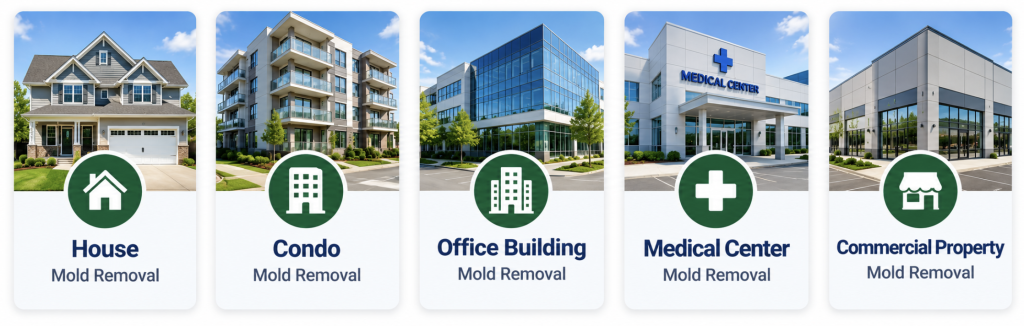
We work with homeowners, landlords, property managers, and business owners. Our service applies to homes, apartments, condos, offices, schools, churches, medical facilities, retail properties, and industrial buildings. Mold can appear in attics, crawl spaces, walls, floors, bathrooms, and basements when materials remain damp. Finding the moisture source matters because cleaning visible growth without addressing that source often leads to recurrence.
What’s Included
We provide professional mold remediation and cleanup for affected residential and commercial areas. Our work may include assessing visible moisture conditions, setting work limits, removing damaged porous materials, cleaning salvageable surfaces, and using HEPA filtration where appropriate. Containment means using plastic walls or barriers to keep mold dust from spreading into cleaner parts of the building. A HEPA air scrubber filters fine particles from the air while work takes place.
We keep the service focused on the affected area and the conditions that caused it. Porous materials such as drywall, carpet, and insulation often need removal when contamination or water damage reaches deep into them. Hard, cleanable surfaces receive a different treatment than materials that absorb moisture. The specific work depends on the affected materials, moisture conditions, and boundaries established for the project.
What’s Not Included
We do not promise reconstruction as part of remediation. Repairs such as new drywall, flooring, painting, or finish carpentry should be discussed separately with the appropriate contractor. Remediation addresses affected materials and cleanup, but it does not replace every repair needed after moisture damage. Resolving the moisture source remains important before repaired areas are closed or refinished.
We also help customers understand what information to gather before work begins. Photos of the affected area, dates of leaks, repair records, and details about recent flooding can help explain the history of the problem. If you are unsure whether a stain, odor, or recurring area needs further identification, visit our mold warning signs guide. For a concise overview of containment, cleanup, material removal, and project considerations, see our mold removal service page.
Why choose our local mold remediation company?
Puyallup Mold Remediation Pros is IICRC certified and BBB registered. Those credentials give you specific information about how we present our company, without asking you to rely on broad promises. We serve properties throughout Puyallup and nearby communities such as Tacoma, Sumner, Bonney Lake, and Edgewood. Our work is suited to both occupied homes and commercial buildings where moisture problems interrupt normal use.
We pay attention to building features that change the work, including crawl spaces, basements, enclosed walls, roof assemblies, and areas around windows. We also consider whether moisture came from rain, plumbing, condensation, drainage, or a high-water event. Properties in flood-prone areas can have different flood-related concerns by parcel, so local flood maps and site conditions should guide those decisions. For city permitting or code questions inside Puyallup, the City of Puyallup Development and Permitting Services is the appropriate public resource.
If you see spreading growth, a persistent musty odor, or materials that stayed wet, call (253) 399-6545 to discuss the situation with our team. We will ask what you noticed, where it is located, and whether a leak or other moisture event occurred. If water is still flowing, shut off the source or the main supply if it is safe to do so before calling. We can then explain what information helps us evaluate the affected area and what service options fit the conditions.
Frequently Asked Questions
Where can mold develop in a Puyallup home?
Mold often develops where water or humid air remains trapped. Common areas include crawl spaces, attics, bathrooms, wall cavities, floors, and around windows. Crawl spaces deserve attention because exposed soil, weak vapor control, and poor airflow can keep framing damp. A visible spot can also be connected to a concealed plumbing, roof, or drainage problem.
Does a musty odor always mean there is visible mold?
A musty odor can point to damp materials or hidden mold, but odor alone does not identify the source. Look for staining, recent leaks, condensation, damp carpet, or changes near walls and ceilings. Do not paint over a suspected area before the moisture problem is addressed. If the source is unclear, independent assessment can help document what needs attention.
What should I do after a leak or flooding event?
Stop the water source when it is safe, then protect people from electrical or structural hazards. Move unaffected belongings away from wet materials and document the area with photographs. Prompt drying or removal helps limit secondary mold growth, especially in drywall, carpet, insulation, and subfloor materials. Large losses, sewage exposure, or widespread saturation should receive professional attention.
How can I reduce mold risk after cleanup?
Fix the moisture source before closing walls or replacing finishes. Use bathroom and kitchen exhaust fans, keep indoor humidity below about 60 percent, and watch for condensation on cold surfaces. In crawl spaces, ground moisture control, insulation, drainage, and airflow all matter. Check roof edges, gutters, downspouts, windows, and plumbing fixtures after periods of persistent rain.